








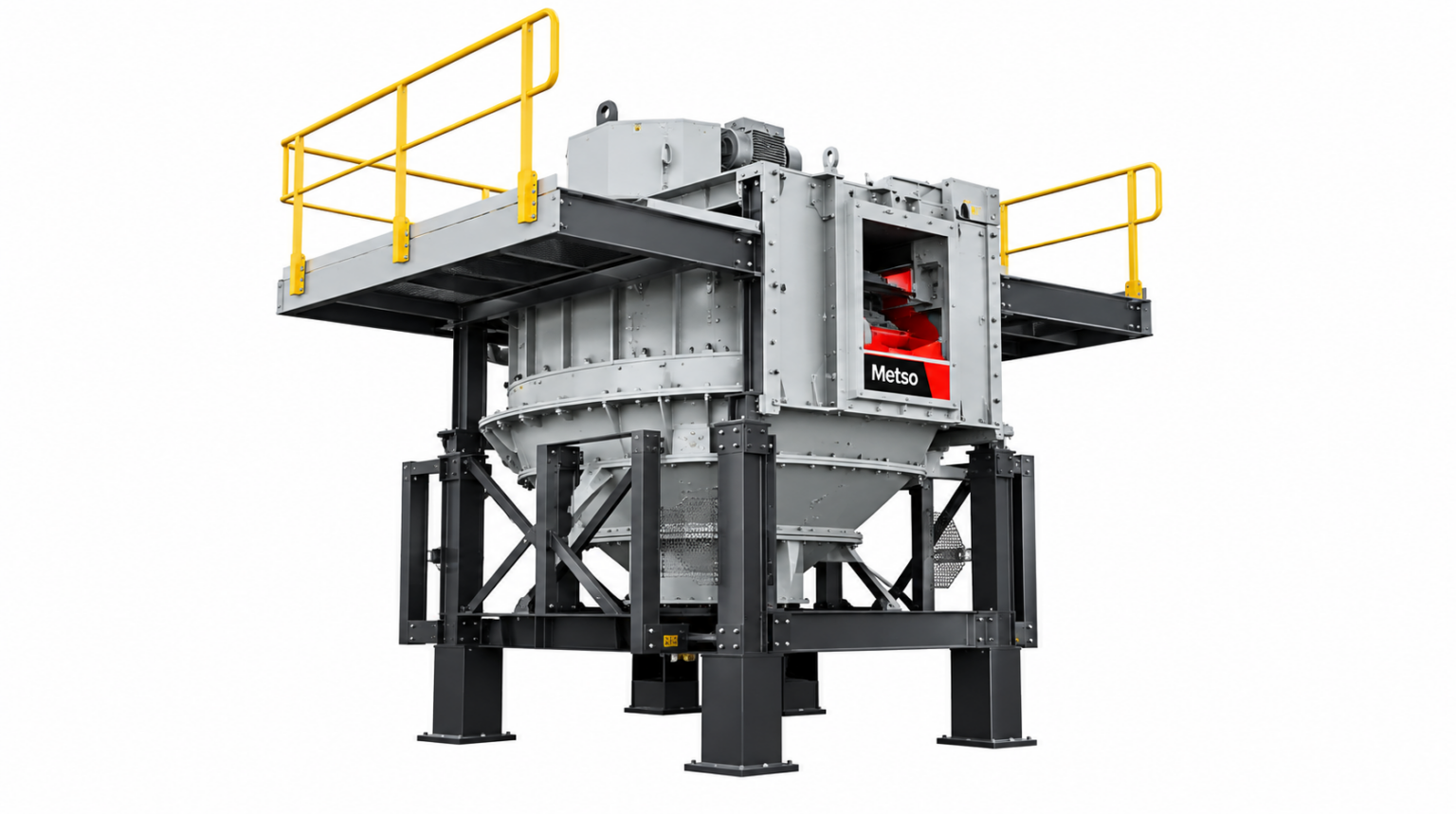
Metso has launched the Sampo™ Cell, a new coarse particle flotation technology designed to improve the recovery of valuable minerals while maintaining fine-particle recovery.
The technology addresses a common challenge in mineral processing, where conventional flotation circuits often require extensive grinding to bring ore particles into a suitable size range for recovery. The Sampo Cell expands flotation performance to coarser and less-liberated particles, potentially reducing the need for intensive grinding.
The Sampo Cell uses a froth-feeding principle, feeding slurry directly into the froth phase under low-turbulence conditions. This helps reduce particle detachment and recover coarse particles that may otherwise be lost through conventional flotation.
The technology can be deployed for front-end gangue rejection or as a scavenger stage to recover valuable particles from intermediate or final tailings.
Metso says the Sampo Cell also simplifies plant integration because it does not require feed classification, fluidisation water or additional concentrate dewatering stages. It uses familiar flotation controls and instrumentation, allowing operators to integrate the technology into existing processing operations.
The technology has been operating continuously in 24/7 industrial-scale scavenger duty at a copper mine in Chile since March 2026. According to Metso, the installation has demonstrated increased total plant recovery by capturing particles that would typically be lost in conventional flotation cells.
The Sampo Cell forms part of Metso’s Metso Plus portfolio, which focuses on improving minerals-processing efficiency through greater resource recovery and improved energy and water efficiency.
The launch expands Metso’s flotation offering alongside its mechanical and pneumatic flotation technologies, digital optimisation tools, process expertise and aftermarket services. The company also provides crushing, screening, grinding, filtration, thickening and tailings technologies for integrated mineral-processing flowsheets.